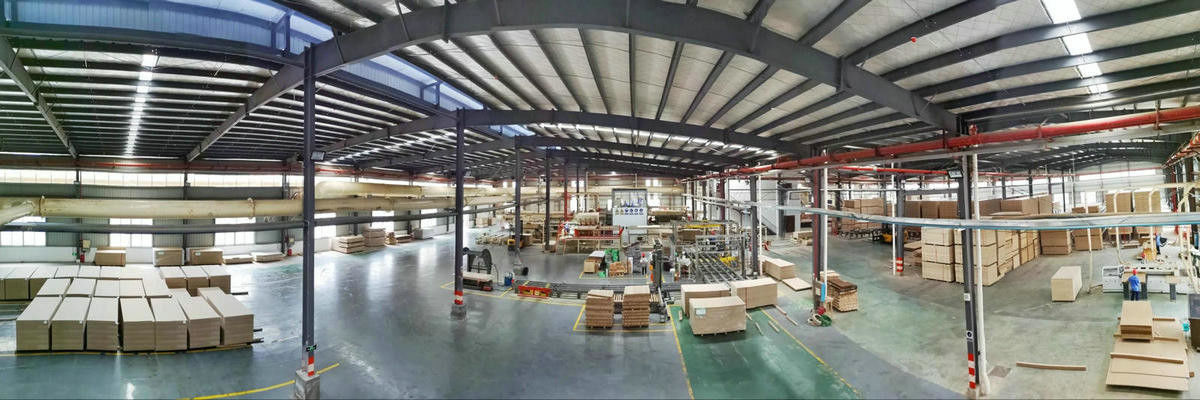
Why High-Automation OSB Production Lines Are Essential for Today’s Wood Panel Manufacturers
As the engineered wood industry continues to grow, Oriented Strand Board (OSB) has emerged as a dominant material due to its high strength-to-weight ratio, versatility, and cost-effectiveness. To meet increasing global demand, especially in the U.S., Canada, and European markets, manufacturers require OSB Production Lines that offer high automation, precise process control, and scalable production capacity. A fully automated OSB Production Line integrates mechanical, electrical, and digital technologies to produce panels with exceptional consistency, structural integrity, and moisture resistance.
The production process begins with log handling and preparation, where logs are cleaned and debarked to eliminate impurities. Automated debarking increases knife lifespan and reduces maintenance downtime. After preparation, logs are processed through flaking machines that cut them into long, thin strands. The quality of these strands is critical because their dimensions determine the final panel performance. Advanced flakers with servo-controlled knife systems ensure uniform strand thickness, resulting in improved bending strength and stiffness.
Once flaked, strands are conveyed to drying systems, which reduce moisture levels to ideal ranges for resin bonding. Energy-efficient dryers equipped with intelligent temperature control ensure fast, uniform drying, which prevents overdrying or fiber burning. Consistent moisture content is vital for achieving proper resin curing during hot pressing. After drying, strands are screened and graded, with oversized or undersized fibers removed to maintain structural consistency.
Next, the strands enter the resin application system, one of the most critical sections of the OSB line. Automated blenders use precision misting technology to ensure every strand receives even resin coverage without excessive consumption. Reducing resin waste lowers production costs while maintaining high bonding performance. The type of resin—often PMDI—is chosen for its strong adhesion, water resistance, and suitability for structural-grade panels. Wax and additives may also be included to enhance durability, moisture resistance, and dimensional stability.
After blending, strands move to the mat forming system, where multiple layers are arranged with specific orientation patterns. Surface layers are oriented parallel to the panel length, while core layers are cross-oriented. This engineered structure enhances load-bearing capacity, dimensional stability, and overall strength. High-precision forming machines equipped with vacuum systems and optical sensors ensure accurate layer distribution, preventing density variations and improving final product quality.
The mat then enters a continuous hot press, the central component of an OSB Production Line. The press applies controlled heat and pressure to activate the resin and compress the mat into a dense, rigid panel. Advanced presses allow real-time control of pressing parameters, ensuring uniform density profiles and eliminating issues such as blistering or delamination. Continuous presses also enable high production volumes with fewer interruptions, maximizing output and energy efficiency.
Following pressing, panels undergo cooling, trimming, sanding, and quality inspection. Cooling stabilizes the internal structure, trimming provides precise dimensions, and sanding creates a smooth surface suitable for lamination or construction use. Automated grading systems equipped with laser and imaging sensors examine thickness, density, defects, and edge quality. Only panels that meet strict standards proceed to stacking and packing.
High-automation OSB Production Lines offer numerous advantages for modern wood panel manufacturers. Automated controls reduce labor requirements, minimize errors, and enable continuous operation. Energy-efficient dryers, presses, and motors reduce operational costs while maintaining high output. Additionally, smart diagnostic systems forecast maintenance needs, reducing downtime and improving overall productivity.
As global construction trends shift toward sustainable and engineered materials, OSB continues to expand its market share. For manufacturers seeking to compete globally, investing in a high-automation OSB Production Line is essential. It enhances production efficiency, improves panel quality, reduces waste, and ensures compliance with American and European building standards. In a competitive marketplace, advanced automation is the key to long-term growth and profitability.


 Your message must be between 20-3,000 characters!