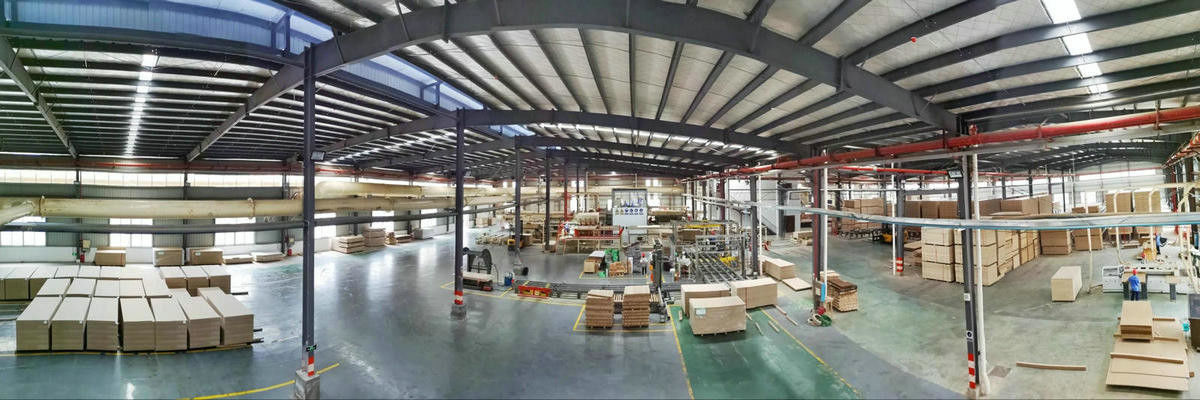
Why an Advanced OSB Production Line Is Essential for High-Quality Engineered Wood Manufacturing
The global demand for engineered wood products continues to rise rapidly, and oriented strand board (OSB) has become one of the most widely used structural wood panels in residential construction, commercial buildings, furniture manufacturing, packaging products, and industrial applications. As more companies look to expand production capacity and improve efficiency, investing in a modern OSB production line has become essential for maintaining competitiveness in the international market. A high-performance OSB production line ensures consistent quality, higher output, lower energy consumption, and long-term operational stability. For manufacturers aiming to supply the North American and European markets, the production line plays a decisive role in meeting strict standards such as EN300, PS2, and CSA O325.
An OSB production line is a complex and fully automated system that transforms raw logs into durable, moisture-resistant, and high-strength oriented strand board. The production process starts with log debarking and screening. Removing bark and impurities is crucial to ensure strand quality and prevent contamination in the final board. After debarking, the logs are fed into a high-precision ring flaker or disc flaker where they are cut into thin wood strands of uniform thickness. The consistency of strand geometry directly affects the mechanical performance of the finished OSB, including bending strength, internal bond strength, and dimensional stability. High-end production lines incorporate sensors and frequency control systems to ensure stable cutting performance even under continuous heavy-load operation.
The next key step is drying the freshly cut strands. Strand drying significantly influences product quality because moisture content determines the adhesion performance of resin and wax. Modern OSB production lines use energy-efficient rotary dryers, triple-pass dryers, or drum drying systems equipped with PLC automatic control. These systems constantly monitor temperature, air flow, humidity, and residence time, ensuring that strands maintain stable moisture content without burning, discoloration, or over-drying. Maintaining moisture uniformity across all strands contributes to consistent mechanical properties and reduces resin waste in later stages.
After drying, strands undergo screening and classification. Oversized or undersized strands are separated to ensure that only high-quality strands proceed to the blending process. This classification step is essential for guaranteeing panel uniformity and structural reliability. Blending is one of the most critical parts of OSB manufacturing. Strands are mixed with a precisely measured combination of resin, wax, and additives. Well-designed OSB production lines include advanced resin dosing systems that measure resin flow in real time. These systems reduce material waste and ensure that each wood strand receives the appropriate coating level for optimal bonding strength. For structural OSB intended for load-bearing applications, adhesives such as MDI are commonly used. These adhesives provide excellent moisture resistance and mechanical strength and are widely accepted in European and American construction markets.
The forming and mat-laying stage involves arranging strands into layers with controlled orientation. OSB typically consists of three layers: two outer layers with strands aligned along the board’s length direction and a core layer with strands oriented perpendicular to the outer layers. Proper strand orientation ensures high bending stiffness and load-bearing capacity. Modern production lines use continuous mechanical forming machines equipped with oscillating rollers, electronic sensors, and automatic distribution systems to achieve precise orientation. Uniformity at this stage determines the stability and durability of the final OSB panel.
Once the mat is formed, it moves into a pre-pressing system to remove air pockets and achieve initial compaction. Pre-pressing is essential to ensure smooth transportation of the mat into the hot press. The hot pressing section is the heart of any OSB production line. Pressing transforms loose wood strands into a solid structural panel under high temperature and pressure. Hot presses for OSB production are typically multi-daylight presses or continuous presses. Continuous presses offer higher efficiency, larger output, and consistent board quality. Parameters such as pressing temperature, pressure curve, heating time, and thickness control are monitored through a computerized control system. Modern presses ensure uniform heat transfer and curing of resin, producing OSB panels that meet international standards.
After pressing, the OSB panels undergo cooling, trimming, edge cutting, sanding, and surface calibration. Sanding machines ensure that board thickness remains uniform and within required tolerances. Quality inspection systems, including automatic defect scanners, detect surface defects, delamination, and density variation. These systems help manufacturers maintain strict quality control and reduce rejection rates. Final boards are then packed, labeled, and prepared for shipment.
Investing in a complete OSB production line offers significant advantages to manufacturers. It allows for high-volume production, reduces labor costs, minimizes waste, and improves overall operating efficiency. More importantly, advanced production lines incorporate environmental protection technologies such as dust filtration, exhaust gas treatment, and energy recycling systems. These systems help manufacturers meet strict environmental regulations in the U.S. and Europe. Automated production not only increases consistency and reliability but also enhances traceability and product certification capabilities, which are crucial for competing in global markets.
In today's competitive environment, a high-performance OSB production line is more than just production equipment—it is a long-term strategic investment. Businesses that upgrade to modern, energy-efficient, and automated systems benefit from higher profitability, stronger market presence, and better product reputation. With rising global demand for engineered wood, manufacturers equipped with state-of-the-art OSB production technology will continue to lead the industry in innovation, sustainability, and competitiveness.


 Your message must be between 20-3,000 characters!