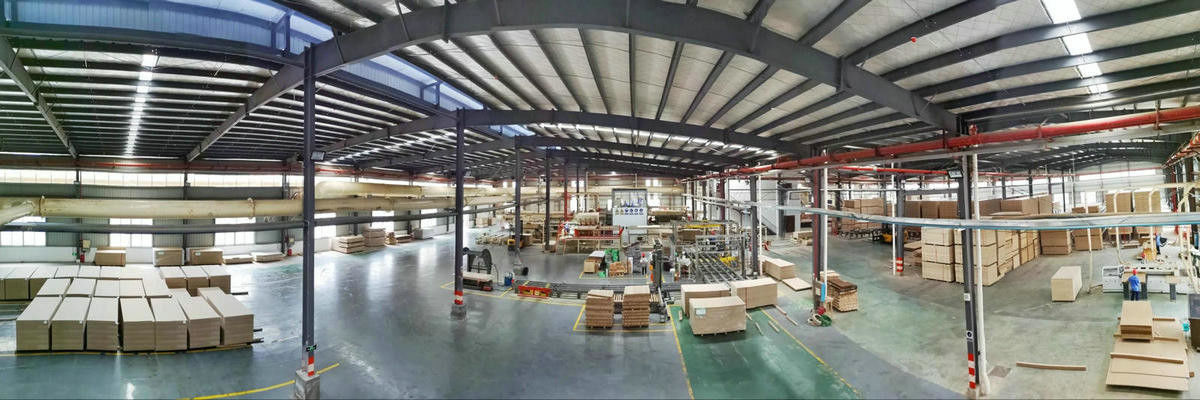
Understanding the Complete Workflow of an OSB Production Line and Its Impact on Product Quality
A complete OSB production line consists of a series of highly coordinated processes that transform logs into structural-grade oriented strand board. This process involves raw material preparation, flaking, drying, screening, blending, forming, pressing, cooling, finishing, and packaging. Each stage contributes to the performance characteristics of the final OSB panel, including strength, moisture resistance, dimensional stability, and surface quality. For manufacturers serving North American and European markets, understanding the technical foundations of each production step is essential to ensuring compliance with industry standards and maintaining a competitive edge.
The process begins at the raw material yard, where logs are sorted, stored, and fed into a debarking system. Debarking removes bark, dirt, and contaminants that can compromise strand quality. Drum debarkers and rotor debarkers are commonly used due to their high throughput capacity and low maintenance requirements. Once debarked, logs are cut into strands using precision-engineered industrial flakers. The geometry of strands—including length, width, and thickness—plays a decisive role in the structural behavior of the final OSB panel. Modern flakers integrate servo control technology, variable-speed feeding, and high-durability blades to ensure stable and uniform flake production.
Strand drying follows flaking. Fresh strands typically contain moisture levels between 40% and 80%, depending on wood species and storage conditions. Excess moisture prevents resin bonding and increases pressing time. Rotary drum dryers are widely used due to their ability to process large volumes of strands at consistent temperature settings. With PLC-controlled systems, operators can maintain precise drying conditions, monitor temperature fluctuations, and prevent overheating. Properly dried strands with uniform moisture distribution enhance resin activation and board stability.
After drying, strands are conveyed through screening equipment where fine particles, dust, and oversized strands are removed. Screening ensures that only clean, uniform strands enter the blending process. During blending, strands are mixed with resin, wax, and other additives. Automated resin dosing systems ensure accurate chemical application and reduce operational costs. Resin types vary depending on performance requirements. MDI resin is preferred for structural OSB due to its superior weather resistance and bonding capability. Uniform resin distribution enhances mechanical performance, water resistance, and adhesion strength.
Forming is the stage where strands are oriented into specific layers. OSB panels typically consist of three to four layers. The outer layers have strands aligned parallel to the board length, while the core layers have strands oriented perpendicular. This alternating orientation provides improved bending stiffness and load capacity. Modern forming machines include adjustable heads, density control systems, and real-time feedback sensors. These technologies contribute to consistent mat weight, precise layer distribution, and uniform density across the entire panel surface.
Following forming, the mat enters a pre-pressing system to improve thickness consistency and remove air pockets. Pre-pressing makes mat handling easier and prepares it for the hot press. Hot pressing is the most critical part of OSB production. High-pressure, high-temperature presses cure the resin and consolidate the strands into a rigid, structurally stable board. Continuous presses are preferred for large-scale production due to their reliability, energy efficiency, and ability to produce uniform boards. Pressing parameters—including temperature, pressure, and residence time—are optimized to ensure proper curing and mechanical performance.
After pressing, the boards undergo cooling to stabilize internal stresses. Proper cooling prevents warping and improves dimensional stability. Boards are then trimmed to standard sizes, edge-treated, sanded, and calibrated. Surface sanding ensures precise thickness tolerance and smoothness, which is essential for applications requiring accurate installation. Automated inspection equipment detects defects such as voids, surface imperfections, and density inconsistencies. This ensures that only boards meeting quality standards proceed to packaging.
Advanced OSB production lines integrate digital monitoring systems, predictive maintenance tools, and automated reporting functions. These systems improve production efficiency, reduce downtime, and enhance product traceability. As global demand for OSB continues to rise, investing in a high-performance production line provides long-term strategic benefits. Manufacturers gain higher output capacity, improved energy efficiency, lower production waste, and the ability to meet demanding customer requirements. By optimizing each stage of production, companies can deliver consistently high-quality OSB panels that meet or exceed international standards.


 Your message must be between 20-3,000 characters!