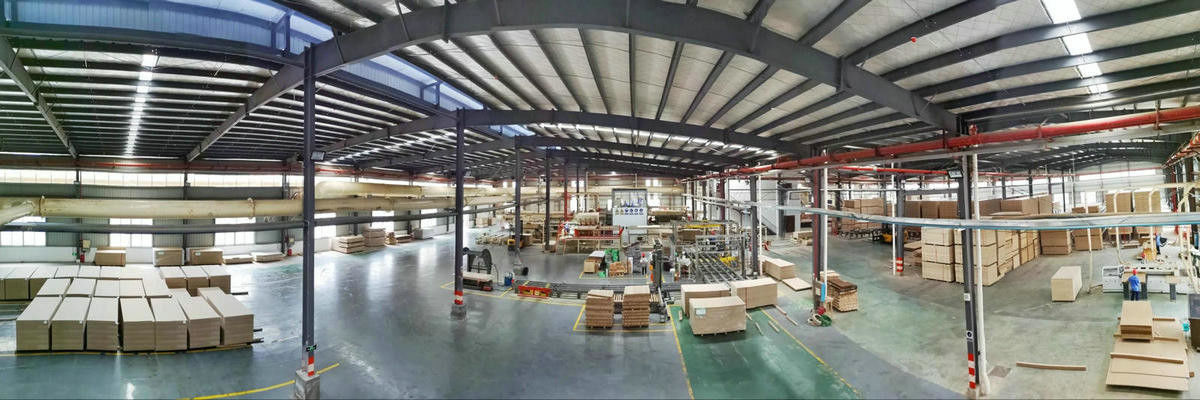
How OSB Production Lines Support Large-Scale Construction and Infrastructure Markets Worldwide
OSB is one of the most widely used engineered wood panels in the world, with applications spanning residential housing, commercial buildings, industrial facilities, packaging, furniture, and logistics. As construction markets in North America and Europe continue to expand, demand for OSB has increased significantly. A high-performance OSB production line is essential for supplying these markets with consistent, structurally reliable, and cost-effective materials.
The growth of residential housing drives much of the global OSB demand. In the U.S. and Canada, OSB is commonly used for wall sheathing, roof decking, and subflooring. For these structural applications, panels must meet strict standards for bending strength, internal bond strength, nail-holding capacity, and moisture resistance. OSB production lines ensure that these panels consistently achieve the required structural performance. Automated strand orientation, precision blending, and continuous pressing result in uniform board density and improved load-bearing capacity.
Commercial construction also relies heavily on OSB. It is used in lightweight steel structures, modular buildings, container houses, temporary installations, and interior fit-outs. The versatility of OSB makes it ideal for cost-efficient building solutions. Production lines capable of manufacturing large-format OSB panels allow construction companies to reduce installation costs and shorten project timelines.
Infrastructure projects—including road construction, bridge formwork, transportation packaging, and logistics—also use OSB. The durability and dimensional stability of OSB make it suitable for heavy-duty applications. Production lines equipped with advanced hot-pressing and resin application systems produce panels with superior mechanical properties, ensuring long-term reliability under demanding conditions.
One of the major drivers of OSB market expansion is the global trend toward sustainable construction. OSB production lines maximize wood utilization by converting small-diameter logs and wood residues into high-value structural panels. This supports responsible forest management and reduces reliance on old-growth timber. Many construction companies in Europe and North America prefer OSB because it aligns with green building certifications such as LEED and BREEAM.
Another essential role of OSB production lines is enabling cost-efficient manufacturing. Automated systems reduce labor requirements, minimize waste, and enhance energy efficiency. This allows manufacturers to offer competitive pricing while maintaining high product quality. Lower production costs help increase OSB adoption in emerging markets as well as developed economies.
OSB is also widely used in furniture manufacturing, cabinetry, and interior decoration. It provides excellent dimensional stability, smoothness, and machining performance when treated and sanded properly. Production lines that integrate advanced sanding and calibration systems produce panels with consistent surface quality, making them suitable for laminating, coating, and veneering.
As global housing demand continues to grow, OSB production lines play a fundamental role in meeting material needs. Manufacturers equipped with advanced production capabilities can supply large volumes of high-performance OSB panels to international construction companies, distributors, and wholesalers. The growth of prefabricated and modular construction further strengthens OSB demand, as these sectors require consistent panel specifications and reliable mechanical properties.


 Your message must be between 20-3,000 characters!