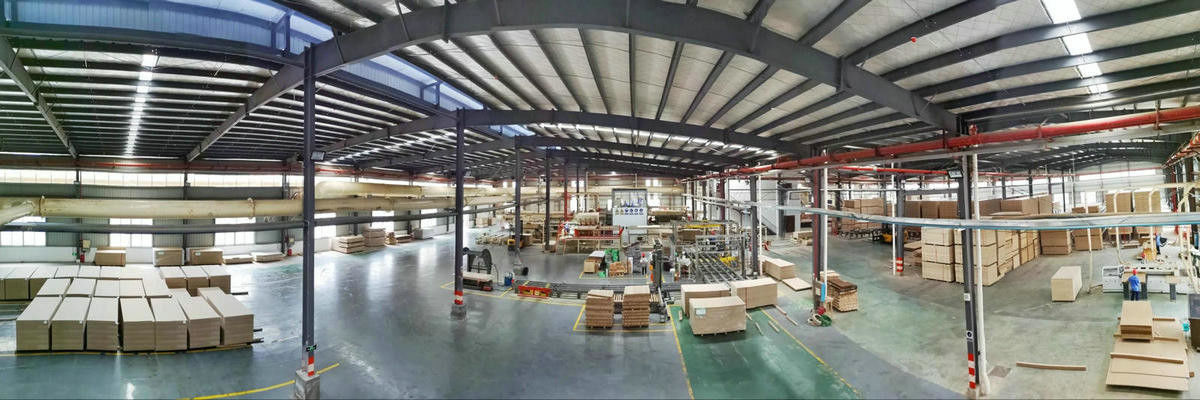
How Modern OSB Production Lines Improve Efficiency, Panel Strength, and Manufacturing Profitability
Oriented Strand Board (OSB) has become one of the most widely used engineered wood products in the global construction and furniture industries. As demand increases, manufacturers in Europe and North America seek reliable, high-capacity, energy-efficient OSB production lines capable of providing consistent panel quality, stable output, and long-term economic benefits. A modern OSB Production Line is a fully automated system designed to convert wood logs into engineered structural panels through a series of precise and coordinated processes including debarking, flaking, drying, screening, glue blending, mat forming, hot pressing, cooling, edge trimming, sanding, stacking, and packing. Each section of the production line plays a crucial role in determining the physical properties, strength, and durability of OSB panels used in flooring, roofing, sheathing, packaging, and industrial applications.
The production process begins with log preparation, where high-quality wood logs are debarked to remove impurities. Automated debarkers ensure the removal of dirt, bark, and stones that could damage flaking knives. Once cleaned, logs are fed into high-performance flakers, producing uniformly sized wood strands. The size, thickness, and fiber orientation of strands are essential because they directly influence panel stiffness, bending strength, and load-bearing capacity. After flaking, strands must be dried to precise moisture levels using rotary drum dryers or tube bundle dryers, ensuring uniform drying without burning or fiber degradation. Consistent moisture content guarantees stable hot-pressing performance and prevents defects such as blistering, delamination, and density variation.
Following drying, strands pass through screening systems that classify them by size. Proper classification ensures long strands are used in surface layers for strength, while shorter strands are used in core layers for stability and reduced material consumption. After classification, strands enter the resin blending system. Modern OSB Production Lines use advanced resin dosing equipment to apply uniform layers of adhesives and wax to each strand. Accurate resin application reduces glue waste while improving mechanical properties and moisture resistance. The choice of adhesive—typically PMDI or MUF resin—determines the panel’s suitability for structural applications, humid environments, or exterior use.
The heart of the OSB Production Line is the mat forming and continuous hot pressing system. Automated forming machines orient strands in precise directions, creating multi-layer mats with surface layers aligned parallel to panel length and inner layers cross-oriented. This engineered structure maximizes strength, stiffness, and dimensional stability. Once the mat is formed, it enters the continuous press, where heat and pressure activate the resin and compress the mat into a dense, high-strength panel. Temperature, pressure, and press speed are precisely controlled to ensure optimal curing and consistent thickness across every sheet. A stable, high-quality pressing section is essential for achieving Class 1 and Class 3 OSB panel performance according to European and American standards.
After pressing, panels undergo cooling, trimming, sanding, and grading. Cooling stabilizes the panel’s internal structure, trimming ensures exact dimensions, and sanding improves surface smoothness for laminating or direct use. Automated grading systems equipped with optical scanners evaluate thickness, density, edge quality, and mechanical strength before panels are stacked and packed for delivery. Modern OSB Production Lines integrate real-time data monitoring and quality-control software to ensure consistent output and minimal waste.
The advantages of advanced OSB production technology include higher production efficiency, lower energy consumption, reduced material waste, and improved panel consistency. Automated controls minimize operator intervention, ensuring continuous, stable operation. Additionally, modern lines support bio-based adhesives, recycled wood utilization, and energy recovery systems, making them aligned with the sustainability expectations of European and American markets.
For manufacturers seeking to expand production capacity or enter the OSB panel market, investing in a modern OSB Production Line is essential. It ensures long-term competitiveness, reliable quality, and compliance with international standards, while providing the ability to supply rapidly growing construction and packaging industries worldwide.


 Your message must be between 20-3,000 characters!